


According to people's opinions and results, the Japanese diet can lose up to 8 kg in 14 days.Is the diet really that effective?We present the daily Japanese diet menu, its principles and contraindications!

The Japanese diet has nothing to do with the traditional cuisine of the country of the rising sun.So if you don't like sushi, don't worry.This nutritional system is not only one of the gentlest and most balanced, but also the most effective.Thanks to the Japanese diet, you can safely lose 3-4 kilograms in just 7 days.
The essence of diet
All weight loss programs can be divided into 5 main types: express diets, monodiets, protein or carbohydrate diets, balanced (not strict) and low-calorie diets.The Japanese diet can be classified as one of the latter.
Despite the fact that according to the Japanese food system, no more than 1200 kcal can be consumed per day, the right menu allows you to be full almost all day.
But this is far from the only advantage of this program.
Benefits of the Japanese diet:
- symptoms such as hunger, dizziness, nausea, headache are not clearly expressed;
- affordable products;
- The 3 meals a day diet fits perfectly into the working day;
- tangible result;
- the result is guaranteed to last for several months after stopping the diet, as the stomach shrinks and the body gets used to fewer calories;
- the list of allowed products is limited, but you can use them to make so many dishes that you won't repeat them for 2 weeks.
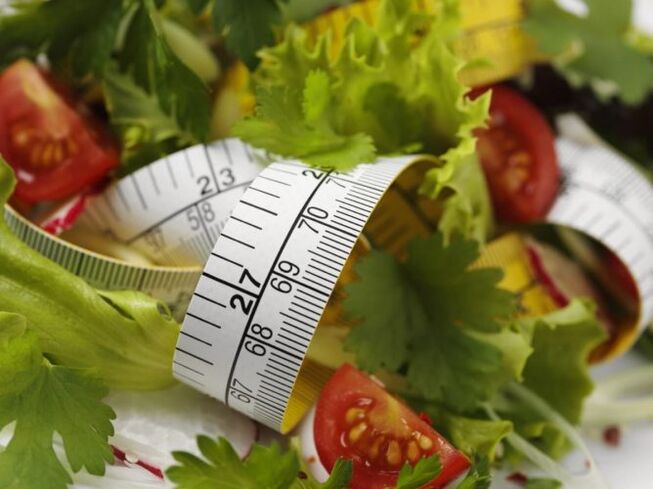
The basic rules of the diet
- The Japanese weight loss system is a salt-free diet.Therefore, you must give up the white poison for the entire duration of the program.
- Yes, and sugar is contraindicated in this diet.Deviation from these two basic rules always leads to lack of results, swelling, elevated blood sugar and even failure.It is important to strictly follow the basic rules of any nutritional system so that the body adapts to the proper processing of food and does not store fat in "reserve".However, if your health condition suddenly deteriorates, it is better to stop the program.
- Water also plays an important role in the Japanese system.Ideally, it will be still water, which you should consume at least 2 liters per day.With the help of liquid, toxins, poisons and salts are removed from the body, and animal proteins are also processed.In addition, water provides the feeling of fullness, which is necessary when following any diet.
Authorized and prohibited products
In fact, in the Japanese diet, as in everything else, there are many more forbidden foods than allowed.But after reading the table below, you will understand that the products are selected so that you can really make a variety of dishes from them.

| Product name | Authorized products | Prohibited products |
| Fruits and berries | Sour apple, pear, cherry, cherry, lemon | Banana, as well as any sweet fruit |
| Vegetables | Cabbage, carrot, zucchini, eggplant | Vegetables not included in the permitted list |
| Meat | Beef fillet, chicken fillet, fish fillet | Fatty meat and fish, any semi-finished products |
| Egg | Chicken and quail eggs | |
| Dairy products | Low-fat kefir, yogurt without additives | Milk, cottage cheese, cream |
| Products made from flour | All flour products | |
| Spices, salt, sugar, butter | Extra virgin olive oil | Salt, sugar, spices |
| Drinks | Brewed natural coffee, green leaf tea without aromas and additives, still water | Factory juices, alcohol, sweet soda |
Japanese diet: menu for 14 days
There are several types of Japanese diets.Each type requires a certain period of time during which this nutrition program must be followed.You can follow the Japanese diet:
- 7 days;
- 13 days;
- 14 days.
Most fans of the Japanese system prefer to use it for 2 weeks.Therefore, we recommend a sample menu for exactly 14 days.
| day p/p | Morning | Lunch | Dinner |
| 1 day | black coffee without sugar | boiled eggs (2), coleslaw, tomatoes or tomato juice | fish, cabbage salad |
| Day 2 | black coffee without sugar | fish, cabbage salad | boiled beef, kefir |
| Day 3 | black coffee without sugar | eggplant or zucchini | cabbage salad, boiled eggs (2), boiled beef |
| 4 days | black coffee without sugar, fresh carrot with lemon juice | fish, tomato juice | fresh fruits |
| 5 days | fresh carrots with lemon juice | boiled fish, tomato juice | fresh fruits |
| Day 6 | black coffee without sugar | boiled chicken fillet, cabbage and carrot salad | carrot, boiled egg (2 pcs.) |
| Day 7 | green tea without sugar | boiled beef, fruit | carrot, boiled egg (2 pcs.) |
| Day 8 | green tea without sugar | boiled beef, fruit | fish, cabbage salad |
| Day 9 | black coffee without sugar | cheese, carrot, boiled egg (2 pcs.) | fresh fruits |
| 10 days | carrots with lemon juice | fish, tomato juice | fresh fruits |
| Day 11 | black coffee without sugar | zucchini or eggplant | boiled beef, kefir |
| 12 days | black coffee without sugar | fish, cabbage salad | fresh fruits |
| Day 13 | black coffee without sugar | boiled eggs (2), boiled cabbage, tomato juice | fish |
| Day 14 | black coffee without sugar | fish, cabbage salad | boiled beef, kefir |
Contraindications
Since this nutritional system, despite its balanced and gentle system, is still quite strict, it is better to consult a doctor before preferring it.Anyone suffering from at least one of the diseases listed below must leave the Japanese program completely.The diet is not suitable:
- patients with gastritis or ulcers,
- people with kidney or liver disease,
- for people with heart disease,
- people suffering from vitamin deficiency,
- people with unstable mental health,
- pregnant and lactating women.
But even if you have no medical contraindications, you should get vitamins before starting the Japanese diet.The fact is that the range of products here is extremely limited, which means that due to a lack of nutrients, nails can start to break and hair can fall out.
In order to avoid severe stress on the body during the Japanese diet, it is better to gradually reduce the diet a few days before it starts.In addition, fast food, flour products and sweets should be avoided.
General recommendations
As you can see on the menu, the Japanese diet only offers three meals a day.This is certainly very convenient for those who study or work.However, the intervals between meals are quite large, so at first some "users" find it difficult to tolerate this program.In addition, the lack of the usual breakfast can also lead to failure.However, you don't have to give in to temptation, even less to the snack.
Otherwise, the Japanese food system simply won't work.Moreover, the weight will also return, and it is possible to have many more extra pounds than before.
Leaving the diet

Not only the process of losing weight should be taken seriously, but also the way out of it.Given that the Japanese diet is quite strict, it is recommended to add no more than one product per day to maintain results.The size of the portions should not exceed the portions under the diet.Porridge boiled in water (rice, buckwheat, oatmeal) and steamed omelet are gradually introduced for breakfast.Fermented dairy products and fruits are suitable for light snacks.
Fatty, spicy and overly salty foods are best avoided completely.In general, salt should be introduced into the menu very carefully, in small portions.Both during the entire period of weight loss and afterwards, you should drink more water: at least 2 liters per day.In total, the rehabilitation period should last at least one month.But the result lasts at least a year.